Affichage des articles dont le libellé est social credit system. Afficher tous les articles

mardi 29 octobre 2019

Chinazism: Why you should worry if you have a Chinese smartphone

China’s use of technology for social control of its citizens is extensive – but it affects users elsewhere too
By Ian Tucker
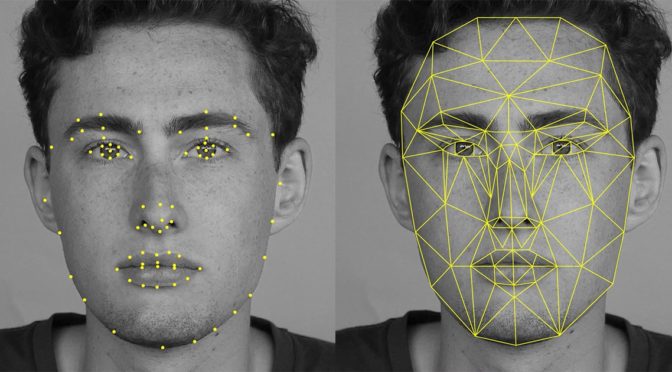
Chinese firms have signed deals with cities around the globe that include facial recognition software. 

Samantha Hoffman is an analyst of Chinese security issues at the Australian Strategic Policy Institute (Aspi). She recently published a paper entitled Engineering Global Consent: The Chinese Communist Party’s Data-Driven Power Expansion.

Internet pioneers heralded a time when information would be set free, giving people everywhere unfiltered access to the world’s knowledge and bringing about the decline of authoritarian regimes… that’s not really happened has it?
Bill Clinton said that, for China, controlling free speech online would be like “nailing Jell-O to the wall”. 
I wish he had been right. 
But unfortunately, there was too much focus on the great firewall of China and not enough on how the Chinese Communist party was trying to shape its external environment.

When did China pivot from seeing the internet as a US-generated threat to something it could use to discipline and punish its own population?
It’s not just the internet, it’s technology in general. 
If you go back to even the late 1970s and early 80s, the way the Chinese Communist party (CCP) talks about technology is as a tool of social management. 
It’s a way of not only coercive control, but also sort of cooperative control where you participate in your own management. 
It’s this idea of shaping the environment, shaping how people think, how they’re willing to act before they even know they’re making a choice. 
That’s the party’s idea.

When did that develop into what is called the social credit system?
Former Chinese leader Jiang Zemin spoke about this in 2000. 
He said we need a social credit system to merge rule by law and rule by virtue. 
I don’t see it as different from the way Hannah Arendt describes how regimes attempt to make the law inseparable from ethics in The Origins of Totalitarianism.

How does the social credit system work for the average citizen? As they are going about their lives, are they continually earning and losing points based on their behaviour?
A pop cultural reference might be the Black Mirror episode Nosedive
But it isn’t the same. 
It’s not really a number score that goes up and down. 
There are multiple inputs. 
So you have, say, legal inputs, like a court record, and financial inputs. 
Then there are third-party inputs, such as surveillance video or data about your sentiment on social media. 
The system includes blacklists, records on public websites, and platforms to support decisions on creditworthiness that integrate things like “sentiment analysis”. 
This applies to companies and individuals. 
Muji’s Shanghai branch had a mark of dishonesty on its credit record with the Shanghai government because one of its products was labelled “Made in Taiwan”.

The number of people affected is enormous: 17.5 million people were prevented from buying flights in 2018. Is there much pushback from the Chinese population about this system?
An average person might not see how it’s affecting them yet. 
Social credit is technology augmenting existing control methods. 
So if you’re used to that system, you aren’t necessarily seeing the change yet. 
Blacklists aren’t new, but the technology supporting this social management is. 
And over time, as it becomes more effective, that’s where more people will notice the impact.

So there isn’t much concept of user privacy or anonymising data in China?

Privacy matters to the average Chinese citizen and there are privacy regulations in place. 
But privacy stops where the party’s power begins. 
And so, you know, the party state might put controls on how companies can share data. 
But again privacy stops where the party’s power begins. 
And that’s a huge difference in the system.
One thing that’s interesting to keep in mind is the system itself. 
When we think about China’s authoritarianism, we think about surveillance cameras, we think about facial recognition. 
But we forget that a lot of the technology involved provides convenience. 
And control happens for convenience. 
Some of the technologies involved in increasing the party’s power are actually providing services – maybe Mussolini and his timely trains is a useful way of thinking about it.

Dr Samantha Hoffman, an expert on China’s cyber security operations.

The most egregious example of this surveillance technology would be in East Turkestan for controlling the Uighur [Muslim] population?

The most visibly coercive forms of what the party is doing are unfolding in East Turkestan. 
There are QR codes on people’s doors for when the party goes in to check on who is in. 
Some researchers have found that if someone leaves through the back door instead of the front door, that can be considered suspicious behaviour.

Is the wider Chinese population aware of how the technology is being used in East Turkestan? Do they realise this is a more enhanced version of what we’ve got in their own lives?
I don’t think people are aware of how bad it is. 
A lot of people don’t believe Western reporting. 
If they see it. 
Even if they do believe it, propaganda has shaped a bad public opinion of the Uighurs.

Do you think the Chinese Communist party has a file on you?
I imagine that they probably have a file on a lot of outspoken researchers. 
I try not to think about what mine would look like. 
In general, a lot of researchers on China have a fear, whether it’s conscious or unconscious, about losing access or the ability to go to China.

You have written about your fears that a commercial deal struck between Huawei and a Turkish mobile operator could be used to monitor the exiled Uighur population in Turkey.
Chinese tech giants like Huawei are signing agreements for smart cities globally – in April we at Aspi counted 75. 
These agreements include public security, licence-plate and facial recognition tools. 
As a local government you’re taking what is the cheapest and best product for your city. 
You’re deploying it in ways you’ve decided are reasonable, but what might be forgotten is that these services require data to be sent back to the company to keep it up to date – and who else has access to that data once the manufacturer has it? 
One agreement was made with Turkish mobile provider Turkcell. 
Turkey has about 10,000 Uighurs living in exile – that system could be used to further control and harass exiles and family members in China.
More generally, I found that the party central propaganda department has made cooperation agreements with a number of major Chinese tech companies. 
As their products are bedded in they become ways of collecting tons of data. 
A language translation tool, for instance, doesn’t sound like a surveillance tool but it’s a way to collect a lot of data. 
Technically it’s not different from what Google does but their intent is different – it’s about state security.

So western governments should be wary of installing Chinese-designed tech infrastructure in their cities?
Yes. 
It’s perhaps uncomfortable for a lot of people to acknowledge, but the party is very clear about its intent. 
Its intent relates to state security. 
The party talks about “discourse power” – the party’s version of the truth being the only thing that’s accepted. 
The Chinese government ultimately controls all Chinese companies through its security legislation. You might be comfortable with someone collecting data to tailor advertising to you, but are you comfortable with sharing your data with a regime that has 1.5 million Uighurs imprisoned on the basis of their ethnic identity?

So we should be cautious about buying Chinese smartphones and smart home products?
I would be. 
You may think “I’m not researching the CCP or testifying in Congress, so I don’t have anything to worry about”. 
But you don’t really know how that data is being collected and potentially used to shape your opinion and shape your decisions, among other things. 
Even understanding advertising and consumer preferences can feed into propaganda. 
Taken together, that can be used to influence an election or feelings about a particular issue.

Some of these elements of monitoring and nudging are present in western life. For instance, fitness tracking that earns you discounts on health insurance, or local authorities using machine learning to identify potential abuse victims. Should we be careful about letting this stuff into society?
We need to be very careful. 
It’s easy to see what the benefits are, but we aren’t adequately defining the risks. 
Some of the problems can be dealt with by introducing more data literacy programmes, so that individuals understand, say, the privacy issues concerning a home-security camera.
The Chinese party state is taking advantage of the weaknesses in liberal democracies, whether they’re legal or cultural. 
They take advantage of our really weak data privacy laws. 
GDPR is a good step, but it doesn’t really deal with the core problem of technology that’s providing a service. 
By its nature the company providing the service collects and uses data. 
Who has access to that data, their ability to process it, and their intent is the problem.
jeudi 23 mai 2019

China’s Orwellian War on Religion

Concentration camps, electronic surveillance and persecution are used to repress millions of people of faith.
By Nicholas Kristof

Police patrolling near the Id Kah Mosque in the old town of Kashgar in China’s East Turkestan colony.

Let’s be blunt: China is accumulating a record of Orwellian savagery toward religious people.
At times under Communist Party rule, repression of faith has eased, but now it is unmistakably worsening. 
China is engaging in internment, monitoring or persecution of Muslims, Christians and Buddhists on a scale almost unparalleled by a major nation in three-quarters of a century.
Maya Wang of Human Rights Watch argues that China under Xi Jinping “poses a threat to global freedoms unseen since the end of World War II.”
China’s roundup of Muslims in concentration camps appears to be the largest such internment of people on the basis of religion since the collection of Jews for the Holocaust. 
Most estimates are that about one million Muslims have been detained in China’s East Turkestan region, although the actual number may be closer to three million.
Muslims are being ordered to eat pork or drink alcohol, against their religious principles.
China has also offered “free health checks” that are used to get fingerprints, photos and DNA samples from Muslims for a surveillance database.
While China hasn’t established concentration camps for Christians, it has harassed congregations, closed or destroyed churches, in some areas barred children from attending services and last year detained Christians about 100,000 times, according to China Aid, a religious watchdog group (if one person was detained five times over the year, that would count as five detentions).
China installed monitoring cameras in churches, including on the pulpit aimed at the congregation. 
With China’s facial recognition software, that would enable security authorities to identify who shows up at services.
The country is also experimenting with even more Orwellian technology, including the Ministry of Public Security’s mass surveillance system and a “Social Credit System” that can create a blacklist for those who don’t pay debts or who cheat on taxes, break traffic rules or attend an unofficial church.
Blacklisted individuals can be barred from buying plane or train tickets: Although the system is still being tested in different ways at the local level, last year it barred people 17.5 million times from purchasing air tickets, the government reported. 
It could also be used to deny people promotions or assign a ring tone to their phone warning callers that they are untrustworthy.
The system isn’t focused on religious people, and some argue that it isn’t as menacing as it is sometimes portrayed, but it’s easy to see how the Social Credit System could punish faith communities — especially if it is integrated with a mass surveillance network. 
The East Turkestan mass surveillance system explicitly targets people who collect money for a mosque “with enthusiasm.”
Through it all, Chinese people of faith have shown enormous courage. 
One Catholic bishop, James Su Zhimin, 87, has been detained by China since he led a religious procession in 1996. 
Counting previous detentions, he has spent a total of four decades in prisons and labor camps.
The paradox is that for half a century before the Communist revolution in 1949, Western missionaries traveled around China, operated schools and orphanages and had negligible impact on the country — yet these days missionaries are banned, ministers are persecuted and Christianity has grown prodigiously. 
There are many tens of millions of Christians, mostly Protestants, with some estimates as high as 100 million.
Some are part of officially recognized churches that pledge loyalty to the government, but most are part of the underground church that has been the main target of the crackdown.
Tibetan Buddhists have likewise suffered brutally. 
Most extraordinary is the fate of the Panchen Lama, the No. 2 figure in Tibetan Buddhism, after the Dalai Lama.
The previous Panchen Lama died in early 1989. 
Following tradition, Tibetans in 1995 chose a 6-year-old boy as the next incarnation of the Panchen Lama. 
Shortly afterward, the Chinese authorities kidnapped the boy and his family, and they haven’t been seen since. 
In his place, the Chinese helped pick a different person as a rival Panchen Lama. (When the Dalai Lama dies, something similar may happen, so at that point there would be two Dalai Lamas and two Panchen Lamas.)
The true Panchen Lama, once the world’s youngest political prisoner, has now apparently been detained for 24 years, along with his entire family, through reformist Chinese leaders and repressive ones.
We can’t transform China, but we can apply levers like targeted sanctions on individuals and companies participating in abuses of freedom — plus we can certainly do more to speak up for prisoners of conscience of all faiths. 
It’s as important to push for their freedom as to seek more soybean exports.

mardi 14 mai 2019

China's crimes against humanity

China’s Worsening Human Rights Abuses Evoke Memories of Mao
By Shane McCrum and Olivia Enos

A Uighur woman passes the Communist Party of China flag on a wall in Urumqi, East Turkestan.
When the State Department recently released its “2018 Country Reports on Human Rights Practices,” China figured prominently in its findings—but not in a good way.
The annual report, issued March 13, shines a harsh spotlight on China and its various human rights abuses, including religious persecution, internment of Uighurs in concentration camps, and increased surveillance of its citizens.
Many assumed that China’s rapid economic transformation would have led automatically to improvements in civil liberties and human rights. 
Instead, China has become more oppressive.
What is taking place today in East Turkestan looks a lot like Mao Zedong’s Cultural Revolution. 
And in modern China, the state is equipped with far more advanced and invasive technology to achieve its totalitarian aims.
The State Department report highlighted a number of China’s draconian practices. 
The report describes China’s crackdown on “extremism,” which resulted in the “detention since 2017 of 800,000 to possibly more than [2 million] Uighurs, ethnic Kazakhs, and other Muslims in ‘transformation through education’ centers.”
These “re-education centers” are designed to instill patriotism and fidelity to the state above ethnic and religious loyalty. 
These practices were labeled among the worst abuses “since the 1930s.”
In its 2018 regulations on religious affairs, China conflates all religion with extremism and sees religious fasting, praying, and abstaining from alcohol in the same light.
To monitor for those behaviors, China uses various forms of surveillance, including internet monitoring, video surveillance, and a “double-linked” household system, in which citizens are encouraged to spy on one another.
Beyond the repression of minority and religious groups, draconian surveillance efforts affect all Chinese citizens.
The State Department report notes the continued application and development of a “social credit system,” which monitors “academic records, traffic violations, social media presence, quality of friendships, adherence to birth-control regulations, employment performance, consumption habits, and other topics.”
As the system becomes more advanced, the government has become more aggressive in implementing repercussions. 
Chinese state media claims that 11 million air-travel trips have now been “blocked” due to citizens’ low “social credit” scores.
The report also examines China’s newest efforts at internet suppression, including the creation of the Cyberspace Administration of China, which shut down an estimated 128,000 websites in 2017. Additionally, platforms such as Google, Facebook, Twitter, and Instagram, as well as any information on topics on Taiwan, the Dalai Lama, and the 1989 Tiananmen Square massacre are all banned from the internet.
It’s now estimated the government employs tens of thousands of individuals to restrict and monitor internet content, as well as to promote state propaganda.
China’s internet influence extends beyond its borders and has far-reaching ramifications for its relations with other nations.
Recently, Mercedes-Benz was forced to apologize to Chinese consumers after quoting the Dalai Lama in an Instagram post. 
Instead of Western companies exerting influence over China to liberalize its totalitarian system, we see the very opposite occurring as Delta Air Lines and Spanish fashion retailer Zara were compelled to apologize to China after listing Tibet, Hong Kong, Macau, and Taiwan as countries independent from China.
This influence likewise extends to Hollywood, where the influence of Chinese censors has led to script changes in multiple blockbuster movies, so as to steer clear of topics politically sensitive in China.
Conversely, China has no problem producing movies that seek to promote Chinese foreign policy and anti-American sentiment. 
An example of this is the Chinese box office record-breaker “Wolf Warrior II,” which contains highly anti-American content and is essentially China’s version of Sylvester Stallone’s anti-Soviet Russia “Rambo” series in the 1980s.
Due to China’s large and dynamic global economy, technological advances, and influence over foreign investors, Beijing has been able to take its level of state control of citizens to the next level.
Additionally, because of the success of its pseudo-communist economy on the world stage, other nations have been forced to submit to its strict censorship laws.
The U.S. should consider carefully steps it can take to hold China accountable for the severe human rights violations taking place—not only because it’s the right thing to do, but because if left unchecked, Beijing’s draconian policies will continue to impede freedom far beyond its borders.

jeudi 13 décembre 2018

Huawei Is the Doorway to China's Police State

The free world should be worried about the creation of a police state under the technology umbrella of Huawei.
by Dan Blumenthal 


The arrest of Huawei Chief Financial Officer Meng Wanzhou was apparently a long time coming. U.S. investigators began looking into Huawei’s dealings when Iran’s once Chinese-backed ZTE was identified as a sanctions-breaker. 
U.S. prosecutors now appear to have substantial evidence of the Chinese Communist Party’s state-backed mobile and technology company’s violations of the sanctions regime against Iran.
The arrest and call for extradition spotlights just how concerned the free world should be about Huawei. 
The stakes are high, as the company is positioned to be the dominant player in 5G mobile networks. If Huawei wins this competition against U.S. companies, much of the world’s data will pass through the mobile networks of a CCP-backed company that does business with the world’s most troubling regimes. 
Huawei is also the critical player in Xi Jinping’s bid to establish a high-tech police state and to leapfrog the United States in critical technologies that will enable a host of military capabilities.
The CCP is already collecting enough data from Chinese citizens who use mobile networks, search engines, and online purchasing systems to establish a “Social Credit System.” 
To say that this system is Orwellian is an understatement. 
Even George Orwell could not have imagined the new technology of totalitarianism.
The Chinese government plan is to have a database on Chinese citizens’ consumer preferences, personal activities, and habits to give each one a “score” based on loyalty to the party and other behaviors deemed by party leaders to make for good citizens. 
This score will determine if Chinese citizens are accepted to colleges, can get good jobs, buy a house, and so much more. 
It is nothing less than an attempt to perfect the world’s first ever high-tech police state.
Huawei will continue to play a big role in the creation of this system. 
But Huawei is an international company with high ambitions. 
An almost unimaginable amount of global data will flow through the next generation of mobile technology. 
This is partly the reason why 5G and artificial intelligence are so closely related: the companies with the most access to data will be able to train the best AI systems.
Thus, this CCP-backed company is poised to determine the future of how people use everything, from transportation to health care. 
If it wins the global race to become the dominant player in mobile technology, then the rest of the world could lose control over the use and integrity of data to the CCP colossus. 
Regardless of Huawei’s protestations that it is a private company, Chinese laws require companies doing business in China to share data that the party deems necessary for national security. 
And, notwithstanding the passage of strict data laws in places like Europe, there will no way to guarantee the integrity and use of data if it flows through a CCP-made 5G system. 
The CCP may not own Huawei, but it is benefitting from the massive amounts of 5G and AI related research and development, the abuse of Chinese patenting and anti-monopoly laws that put competitors at a disadvantage, the absence of ethical restrictions in China, and the use of AI technologies.
Thus, the recent arrest reveals just one element of Huawei breaking of international laws and practices. 
And, the Chinese Communist Party’s attempt to browbeat Canada to break its own laws shows how close Huawei and the party really are. 
If Beijing succeeds in its years-long plan for Huawei to become the dominant player the mobile industry, then it will be China—not the West—setting the ‘rules of the road’ for the next generation of technology. 
 Given Huawei’s record, this is a truly troublesome future to consider.

vendredi 20 juillet 2018

Inside China’s surveillance state

From schoolchildren to political dissidents: how technology is tracking a nation 
By Louise Lucas and Emily Feng

Zhejiang Hangzhou No 11 High School, on the fringes of downtown Hangzhou in eastern China, is a green, peaceful-seeming place to learn.
Gazebo-like structures nestle among lush foliage; grey stone sculptures enact eternal dioramas and Japanese maples gently fan placid lakes. 
It is also a digital panopticon.
A surveillance system, powered by facial recognition and artificial intelligence, tracks the state school’s 1,010 pupils, informing teachers which students are late or have missed class, while in the café, their menu choices leave a digital dietary footprint that staff can monitor to see who is gorging on too much fatty food. 
In May, The People’s Daily, a state-run media group, tweeted approvingly about the school’s use of cameras to monitor, via their facial expressions, how children were engaging in class.
Had this classroom-based part of the programme not been abruptly halted later that month in the wake of local controversy, it would also have been deployed to predict which pupils (the slouching ones) were likely to underperform.
Welcome to China, where AI is being pressed into service as handmaiden to an authoritarian government.
For many critics, this seems fraught with danger: an Orwellian world where “Big Brother” is always watching, able to spy on anyone from human rights lawyers to political dissidents and persecuted minorities.
For supporters, it is near utopian: a land where criminals and miscreants are easily weeded out, where no one can cheat, where good behaviour is rewarded and the bad punished.
The latter vision is the Chinese government’s stated aim.
By 2020, a national video surveillance network will be “omnipresent, fully networked, always working and fully controllable”, according to an official paper released in 2015. 

Visitors try out facial-recognition technology at the China Public Security Expo in Shenzhen last year 

The idea of constant monitoring is not unprecedented in China.
Indeed, the name of the government’s 2020 project — xueliang, or “sharp eyes” — is a throwback to a Communist party slogan, “The people have sharp eyes”, referencing the totalitarian ploy of encouraging neighbours to spy on their neighbours.  
Under Mao Zedong, cities were split into grids of socialist work units where access to rations, housing and other benefits was enforced by local spies who reported wayward behaviour from their neighbours.
This system of social control had in turn been built on a model of communal self-policing introduced centuries before, during the Song dynasty.  
Today, the grid system has been revived, manned by an extensive network of volunteer and part-time lookouts.
In more troubled regions such as East Turkestan and Tibet, armed police booths dot street corners. Beijing has about 850,000 “informants” patrolling its streets, according to state media.
Renewing these old-school tactics is a deliberate decision: the government knows that while surveillance technology is advancing rapidly, it is far from perfect. 
Cheetah Mobile is a Chinese company whose subsidiary’s facial-recognition vending machine scored top in an international facial-recognition test last year sponsored by Microsoft Research.
But Fu Sheng, its founder and chief executive, concedes it has a long way to go in terms of spotting faces in crowds.
“The human is an excellent product,” he tells the FT.
“No technology can exceed it.” 
 That may not matter.
When the British philosopher Jeremy Bentham envisaged his panopticon penitentiary in the late 18th century — a circular building with an inspection tower at its centre — the idea was that inmates would never know if they were being observed or not.
This “simple idea in architecture” would offer “a new mode of obtaining power of mind over mind”, Bentham wrote.
For some analysts looking at the impact of China’s growing surveillance state, any technological shortcomings are incidental.
Like the panopticon itself, it is the fear of being watched that is the most powerful tool of all.
“There’s a wave of enhanced surveillance going on worldwide,” says Rogier Creemers, who studies Chinese governance at Leiden University.
The difference in China is the historical context: “Liberal democratic institutions are based on the notion that state power must lie in the hands of the population. There are things the state is just not supposed to know or do,” he says.
“China starts from a different point of view — that a strong empowered state is necessary, in order to drag the nation forward. In China, surveillance is almost a logical extension of what the state is supposed to do, because the state is supposed to keep people safe.” 
 Feng Xiang is translating the Old Testament book of Jeremiah when the FT visits his office at Beijing’s Tsinghua University.
A prominent legal scholar, he has been studying AI and its implications for jobs, society and capitalism in China.
 His view is a gloomy one.
As he sees it, public surveillance via CCTV cameras is being rapidly supplemented by a range of more insidious data collectors-cum-tracking devices: the smartphones in almost half of all Chinese citizens’ pockets. 
This will eventually create a world devoid of privacy. 
 “It’s not like George Orwell’s 1984, but it’s like a new way of life,” says Feng, noting that even a hike in a scenic park or up a mountain in China today can involve mandatory fingerprinting by police. “In the old days at least you had somewhere you could hide, or where you can do your private things. But now the assumption is people know where you are.”
 Against the backdrop of deepening surveillance, the Chinese government is introducing a “social credit system”.
First described in an official document in 2014 and now being piloted in various forms in several cities, the idea is that people will ultimately be scored based on past behaviour, taking in misdemeanours such as traffic offences and court records. 
 At present, a good financial credit score, handed out by some companies and operating rather like a loyalty programme, can confer benefits such as waived deposits on shared bikes or preferential loan rates.
A poor social credit score, by comparison, could jeopardise a university place, rule out certain jobs and even limit travel: more than 10.5 million people have been barred from buying airline or high-speed train tickets, according to the Supreme Court, since a debtors blacklist was launched. 
 Meanwhile, the technology by which the government can track people is constantly evolving.
Facial recognition is increasingly used to unlock smartphones in China, and thanks to its multiple commercial applications — from allowing easy payment in a grocery store to home security — it has attracted a slew of venture capital from across the world.
One tech banker dismisses facial recognition to the FT as “kindergarten stuff” compared with what will come next. 


Police in Zhengzhou wearing AI-powered smart glasses with facial-recognition capability in April this year 

Some of China’s leading facial-recognition players, for example, are now moving into gait recognition.
Hanwang Technology was an early entrant in the field: it was forced to rethink its fingerprint-recognition technology when the Sars epidemic of 2003 left people in China terrified of physical contact. 
 “We can see the human figure and his gait, so if his cap is pulled down [we] can still recognise him,” explains Liu Changping, president of the Beijing-based company.
The Chinese authorities already have a decent video database to build on, he adds: “If [someone] was put in prison before, there’s video of him walking around.”
 Although China is expanding its surveillance network nationwide, it is in the western region of East Turkestan that the technology is being put to its most extreme use.
The region has been closely policed since 2009, when deadly riots broke out between the 11 million-strong Muslim Uighur population and the minority Han Chinese.
East Turkestan is a vast region, and a relatively poor one, making the multitude of gleaming cameras and sophisticated technology — inside bazaars, schools and even mosques — all the more incongruous amid the expanses of desert and empty roads. 
 Residents were unwilling to talk on the record about their experiences, for fear of repercussions, but it is clear that normal life has changed irrevocably for the Uighurs.
Tahir Hamut, a Uighur poet and film-maker who fled China and is now based in the US, tells the FT about the day he and his wife were ordered to visit their local police station and leave voice recordings, fingerprints, DNA swabs and, of course, high-resolution video footage of their faces making various expressions.
 “I am a director, I make films, and I have seen many kinds of cameras. But I had never seen a camera that strange. They adjusted [the] camera to my eye level. They had me look up and look forward and down, left and right and back,” Hamut recalls.
“They did the same for females . . . they had the women pucker their lips and filmed that. Every step had to be completed perfectly; each expression could not be done too quickly or slowly. If you made a face too fast, the computer would ask you to stop and have you repeat it again. I had to try many times. Many people had to spend an hour to complete this facial filming.” 
Mandatory surveillance software is installed on residents’ mobile phones to scan for Islamic keywords and pictures.
Some people told the FT that anyone found to have shared illicit material would be sent to the region’s extensive network of extralegal detention camps, where hundreds of thousands of Uighurs have already been imprisoned.
Making too many phone calls to or from anywhere outside of East Turkestan can also result in detention.
As a result, Uighurs living in East Turkestan can go years without speaking to family members working in coastal cities like Beijing or Shanghai. 
 Facial recognition, intrusive as it is, is only one of the tools the authorities are using to monitor residents.
Last year police were told to conduct DNA swabs, iris scans and blood tests using a specially designed mobile app and health checks, in order to build a region-wide biometric database. 
 None of this is cheap.
Overall public security spending in the region was Rmb57.95bn ($9.16bn) in 2017, a 10-fold increase over the previous decade.
That has proved a windfall for Chinese security companies.
The government’s investment in public-private partnerships in security has also increased, from $27.3m in 2015 to at least $1.1bn in 2017, based on a tally of existing public tenders and Bank of China data.
Among the largest of these privately funded projects is in East Turkestan’s Shache county, where almost 100 people were killed in 2014 in what state media called a terrorist attack.
The network there will include a video surveillance centre, cloud storage facilities and a drone system. 
 Smaller companies are also getting a slice of the action, especially government-backed start-ups with the right connections.
Meiya Pico, a private company based in the coastal Fujian province, was selected to develop a desktop version of the mobile-surveillance software that East Turkestan residents were forced to download this year.
The software is now installed on the computers of all public companies and academic institutions. Several East Turkestan academics told the FT that authorities are now alerted if illicit files are accessed. 
Meiya Pico’s management frequently meets with high-level officials from the Communist party and the state security apparatus, according to articles and pictures on its website.
Indeed, many Chinese tech companies talk proudly of working to further the government’s aims. “Our business is dictated by the political requirements of our country. ‘Maintaining stability’ is China’s national security priority so East Turkestan really needs our products. The province is our largest client by far,” says Wang Wufei, a sales director at X-Face, a Shenzhen-based company that makes facial-recognition software and hardware.
In June, X-Face won a contract to supply 200 security checkpoints in East Turkestan. 
 Scarier still is what comes next.
A Shenzhen start-up making grenade-bearing drones predicts the East Turkestan authorities will become its largest client.
Another, East Turkestan-based Zhenkong, which specialises in signal-interference technology and has received funding from the East Turkestan border police, sounds a bellicose note.
“The government needs entrepreneurs like us,” says Ge Guangxu, its president.
“There is no second place in war. We need to be prepared.”

Three centuries ago, Jeremy Bentham suggested his panopticon would lead to “morals reformed . . . industry invigorated . . . public burthens lightened”.
China’s facial-technology players sound an eerily similar note.
Megvii and SenseTime, two of the country’s biggest facial-recognition companies, claim their technology has apprehended thousands of criminals — all without the need for armies of people to watch hours and hours of CCTV footage.
Both have attracted billions of dollars in funding, from Chinese and Russian state funds as well as stars of the Chinese tech scene such as Alibaba.


A statue in honour of Mao Zedong next to CCTV cameras in Tiananmen Square, Beijing 

Qi Yin, co-founder and chief executive of Megvii, notes the myriad uses of his company’s Face++ technology, such as in fintech payments.
But for him, surveillance is king: “I believe this will be the largest one in the next three years.” Megvii counts on the government for 40 per cent of its business and describes its work as profiling rather than just identifying.
Someone who regularly appears in video from a subway station but is not an employee could be a thief, says Xie Yinan, a vice-president at Face++, and the information — in the form of code — is sent to the police.
 One of the surveillance industry’s recent — and much publicised — success stories took place at a pop concert in eastern China.
While Jacky Cheung, a Hong Kong pop star (rebranded a “fugitive trapper” by the Chinese media) crooned, cameras were automatically sweeping the audience. 
 Facial-recognition technology picked out four men accused of crimes — including a ticket scalper and a greengrocer accused of a Rmb110,000 potato scam in 2015.
“Smiling as he approached his idol, he did not realise he had already been spotted,” Jiaxing police gloated in a social-media post. 
 Aside from its uses in law enforcement, AI-aided surveillance is also being touted as a tool for industry.
Hanwang Technology, China’s grandfather of facial recognition, has sold its surveillance system to construction sites, enabling managers to track how many hours workers are on site and who is slacking. 
 Another company, LLVision, produces smart sunglasses with built-in facial recognition; these became famous after police in Zhengzhou were photographed wearing them to monitor travellers at train stations earlier this year.
But the company has also been supplying them to manufacturing plants for use in time management and quality control.
 “[Even] if you have 10,000 people checking [machines and workforces] globally, they cannot manage and audit and analyse their checking,” says Fei Wu, chief executive and founder of LLVision.
“Nor can you see that worker A is working faster than worker B, or how you get more people to work like worker A.”
 Wu, a graduate of the UK’s Birmingham University, raised money to produce the sunglasses through crowdfunding and spent three years trialling them.
They have been worn by surgeons in theatre to record or broadcast surgery.
There is even demand among insurers, he says, to use the glasses to recognise cows — farmers have been known to claim insurance on the same deceased bovine twice. 
But, as with so many other Chinese companies in this field, a key client for LLVision is the Public Security Bureau.
Think of it, says Wu.
There are almost 1.4 billion people in China.
“But the PSB is done by a few million people. Medical treatment is done by a few million people. Education is done by a few million people . . . There’s a huge gap to fill, so tech must play a big role.” As the technology to enable mass surveillance and identification becomes more sophisticated, governments across the world will face dilemmas over when and how to use it.
One overseas minister on a trip to China was awed by the technology he was shown, according to Wu, briefly fretting at his country’s strict privacy rules before concluding that in the case of a wanted criminal, everyone would want him to be caught. 
 Germany unleashed a wave of criticism when it began piloting facial recognition to help track and catch suspected terrorists, while the UK’s independent CCTV watchdog wrote to police chiefs last year raising concerns about the increasing use of facial-recognition technology to monitor crowds. Earlier this year, about 40 civil liberties groups wrote to Amazon urging it to halt sales of its Rekognition software, which the company has promoted as offering “real-time face recognition across tens of millions of faces and detection of up to 100 faces in challenging crowded photos”.
The product, which has been sold to a number of US police forces, “poses a grave threat to communities, including people of colour and immigrants”, the campaigners said. 
 Then there are China’s own exports, particularly to developing countries under the “ One Belt One Road” initiative.
One such deal, to Zimbabwe, could highlight another key problem with facial-recognition technology, which learns according to the data it is fed: an MIT and Stanford University study found error rates of 20-34 per cent for determining the gender of darker-skinned women compared with less than 1 per cent for light-skinned men.

 The rise of mass surveillance yields reams of data, and therein lies one of the big dangers for any country going down this road, says Nuala O’Connor, chief executive of the US-based Center for Democracy and Technology.
“The risks are the creation of a pervasive and permanent database of individual images for law enforcement, but then used for other purposes, perhaps by government actors,” she says.
 Some 530 camera and video surveillance patents were filed by Chinese groups last year, according to the research firm CB Insights — more than five times the number applied for in the US.
Unhindered by worries about privacy or individual rights, China’s deepening specialism has attracted global customers and investors.
“The surveillance industry is still in the growth phase,” proclaimed analysts at Jefferies, the New York-based investment bank. 
 Hikvision, a company majority owned by two Chinese state entities whose surveillance systems have been used everywhere from East Turkestan to US military bases, was selected to join the MSCI Emerging Markets Index — a global equity benchmark — in June.
Its Chinese-listed shares have risen nearly fivefold over five years. 
 In Hangzhou, a start-up called Rokid is preparing to release augmented-reality glasses next year. Outside its lakeside office, the company’s founder Mingming Zhu — known as Misa — demonstrates a prototype pair to the FT.
The glasses are aimed at consumers rather than law enforcement: walking into a party, for example, their facial-recognition technology means you could immediately see the names of guests superimposed above their heads; the glasses could potentially also add information from their social-media feeds. 
 They look cool, but there is something spooky about getting the lowdown on people without so much as a “hello”, and Misa sounds a note of caution.
“We are making something happen but we have to be very careful. With AI we have a bright side and a dark side. The most difficult thing you are working on right now might bring you to someplace wrong.”

jeudi 28 juin 2018

China’s social credit system interferes in other nations’ sovereignty

System, criticised as an Orwellian tool of mass surveillance, is shaping behaviour of foreign businesses, report says
By Kelsey Munro
China’s social credit system, a big-data system for monitoring and shaping business and citizens’ behaviour, is reaching beyond China’s borders to impact foreign companies, according to new research.
The system, which has been compared to an Orwellian tool of mass surveillance, is an ambitious work in progress: a series of big data and AI-enabled processes that effectively grant subjects a social credit score based on their social, political and economic behaviour.
People with low scores can be banned or blacklisted from accessing services including flights and train travel; while those with high scores can access privileges. 
The Chinese government aims to have all 1.35 billion of its citizens subject to the system by 2020.
But a new report by US China scholar Samantha Hoffman for the ASPI International Cyber Policy Institute in Canberra claims the system’s impact beyond China’s borders has not been well understood, and is in fact already shaping the behaviour of foreign businesses in line with Chinese Communist party preferences. 
It has the “potential to interfere directly in the sovereignty of other nations”, she said.
She said recent incidents where Chinese authorities pressured international airlines in the US and Australia to use Beijing’s preferred terminology to refer to Taiwan and Hong Kong were high-profile examples of this new extension of the social credit system rules to foreign companies.
The civil aviation industry credit management measures that the airlines are accused of violating were written to implement two key policy guidelines on establishing China’s social credit system,” she explains. 
Social credit was used specifically in these cases to compel international airlines to acknowledge and adopt the CCP’s version of the truth, and so repress alternative perspectives on Taiwan.
As of 1 January 2018, all companies with a Chinese business licence – a necessity for operating in the country – were brought into the social credit system through the new licence requirement to have an 18-digit “unified social credit code”. 
Through this business ID number, the Chinese government keeps track of all businesses, reporting transgressions on its National Enterprise Credit Information Publicity System, Hoffman said. 
The system extends to non-profits, NGOs, trade unions and social organisations after 30 June.
“Companies don’t have a choice but to comply if they want to continue doing business in China,” Hoffman told the Guardian Australia.
Sanctions for companies so far have come in the form of fines, she said, citing the example of the Japanese retailer Muji, which was fined 200,000 yuan in May for labelling on products sold in China that listed Taiwan as a country. 
The fine cited a violation of PRC advertising law banning activity which damages “the dignity or interests of the state”, but the violation was also recorded on the social credit system’s National Enterprise Credit Information Publicity System. 
This listing can trigger further fines from other state agencies, Hoffman said.
It is not clear whether foreign companies have access to the information kept on their social credit record, nor if foreign citizens could find out if their nation’s companies have made concessions or changed their behavior as a result.
Guardian Australia unsuccessfully sought comment from Qantas, which announced earlier this month it would change the language used on its global websites in accordance with the Chinese government’s preferred terminology for Taiwan.
Hoffman is a visiting academic fellow at the Mercator Institute for China Studies in Berlin. 
Her report, Social Credit: Technology-enhanced Authoritarian Control with Global Consequences, was published on Thursday by the Australian Strategic Policy Institute, a security-focused thinktank which has urged the Australian government take a harder line on Chinese government interference in its democracy.
The report comes amid a difficult period in Australia-China relations; in the same week Australia’s parliamentary committee released a bipartisan report paving the way for the passage of new draft laws against covert, coercive or corrupt foreign interference.

What is the social credit system?

China’s social credit system is an Orwellian tool of social monitoring and political repression.
People can be blacklisted for transgressions such as smoking on trains, using expired tickets or failing to pay fines, as well as spreading false information or causing trouble on flights, according to statements released by China’s National Development and Reform Commission in March.
Citizens with high credit scores can access better hotels, rental homes and even schools; while those with low credit scores can be temporarily or permanently banned from taking planes or trains, as happened to 6.15 million people in 2017, on the government’s own figures. 
A pilot version of the scheme run this year in Hangzhou City reportedly saw citizens with high social credit ratings get free access to gym facilities and shorter public hospital waiting times.
On the business side, the Brookings Institute has reported that businesses that pay tax on time and “abide by government demands” will get better loan conditions and easier access to public tenders; noncompliant businesses will face more difficult business conditions.
But researchers believe its power and reach may be overstated.
Queensland University of Technology researcher Meg Jing Zeng has said that while the social credit system can be used to punish political dissenters such as journalist Liu Hu, it may have positive benefits because government officials can be blacklisted for corrupt behaviour. 
Over 1,100 officials were on restricted lists at December 2017, according to the state media organisation People’s Daily.
An academic study of the social credit system released last month by Belgian researcher Rogier Creemers said that while the Chinese government had high ambitions for the system, at present it remained a relatively crude tool.

lundi 28 mai 2018

China is taking digital control of its people to chilling lengths

The Chinese government’s unsettling new system will see citizens rated by ‘good deeds’
By John Naughton

Digital technology as social control: China’s social credit system aims to go further than paying for services via smartphone.

Watching Donald Trump trying to deal with China is like watching a clown dancing in front of an elephant. 
The US president’s entire approach is transactional – the methodology he employed in his allegedly successful career as a property developer. 
It’s all sticks and carrots, bluff and counter-bluff, aggressive bluster followed by rapid retreats. 
But then Xi Jinping leant on Trump to rescue the Chinese tech company ZTE, brought to its knees by a US ban because it had evaded sanctions on trade with Iran. 
Trump duly complied and ZTE executives breathed again.
And so it goes on. 
But behind these scenes a much bigger long‑term game is being played out. 
If it were a board game, it would be called Hegemony. (drat: a quick search reveals that there are already games on this theme.) 
Hegemony is an old concept, much beloved of Marxists, coined to describe the (military or cultural) predominance of one country or group over others. 
From the mid-1940s until 1990, the world was overshadowed by two hegemons – the US and the USSR. 
After the Soviet Union imploded, the US became the sole global hegemon. 
But now, with the rise of China, that hegemonic grip seems to be loosening.
The big issue, then, is whether we are witnessing a tectonic shift in geopolitics. 
My guess is that we are. 
Trump, who has the attention span of a newt, probably can’t see what’s going on, but the Chinese do – and so too do many parts of the US government, notably those concerned with economic development and national security, and some of the more reflective members of Congress.
What these folks understand is that hegemonic power is largely about industry – and therefore about technology. 
And the dominant industries of the future will be dominated by information technology rather than by heavy industries such as steel and cars. 
Which is why there is now so much panic in the US about wholesale theft of intellectual property by Chinese agencies and the astonishing progress that the country is making in computing and artificial intelligence.
In the old days, western snobbery led to the complacent view that the Chinese could not originate, only copy. 
One hears this less now, as visitors to China return goggle-eyed at the extent to which its people have integrated digital technology into daily life. 
One colleague of mine recently returned exasperated because he had been expected to pay for everything there with his phone. 
Since he possesses only an ancient Nokia handset, he was unable to comply and had been reduced to mendicant status, having to ask his Chinese hosts to pay for everything.
If the future is digital, therefore, a significant minority of China’s 1.4 billion citizens are already there. 
More significantly, the country’s technocratic rulers have sussed that digital technology is not just good for making economic transactions frictionless, but also for implementing sophisticated systems of social control.
In particular, they are adapting the ubiquitous “reputation rating” system by which online platforms try to get feedback on vendor and customer reliability. 
The government is beginning to roll out its social credit system, which is designed to “raise the awareness of integrity and the level of trustworthiness in Chinese society”. 
It will focus on four aspects of behaviour: “honesty in government affairs”, “commercial integrity”, “societal integrity” and “judicial credibility”.
When first conceived in 2007, the intention was to replicate the credit rating systems common in the west for assessing people’s financial creditworthiness. 
But why, thought the Chinese, stop at finance? 
Why not use the technology to assess how “good” a citizen one is? 
Everyone starts off with a baseline allowance of, say, 100 points. 
You can earn bonus points by doing “good deeds” such as separating and recycling rubbish. 
On the other hand, behaving in what is regarded (by the state) as antisocial behaviour can lose you points. 
Examples of deductible behaviour can apparently include: not showing up at a restaurant without cancelling your booking, cheating in online games, leaving false product reviews and even jaywalking. 
And if your social credit score is too low, you find yourself barred from taking flights or travelling on certain trains.
As a way of using digital technology for social control, this takes some beating. 
There are already pilot systems in operation. 
The Chinese plan to have the system fully in place by 2020. 
By which time it will be ready for export to other countries – who will be queueing up to buy it, because one of the things states do is to buy the current hegemon’s technology. 
In 2020, though, Donald Trump will still be ranting on about steel dumping and import tariffs. 
And running for a second term.

lundi 19 mars 2018

China’s New Frontiers in Dystopian Tech

Facial-recognition technologies are proliferating, from airports to bathrooms.
By Rene Chun

Dystopia starts with 23.6 inches of toilet paper. 
That’s how much the dispensers at the entrance of the public restrooms at Beijing’s Temple of Heaven dole out in a program involving facial-recognition scanners—part of the president’s “Toilet Revolution,” which seeks to modernize public toilets. 
Want more? 
Forget it. 
If you go back to the scanner before nine minutes are up, it will recognize you and issue this terse refusal: “Please try again later.”
China is rife with face-scanning technology worthy of Black Mirror
Don’t even think about jaywalking in Jinan, the capital of Shandong province. 
Last year, traffic-management authorities there started using facial recognition to crack down. 
When a camera mounted above one of 50 of the city’s busiest intersections detects a jaywalker, it snaps several photos and records a video of the violation. 
The photos appear on an overhead screen so the offender can see that he or she has been busted, then are cross-checked with the images in a regional police database. 
Within 20 minutes, snippets of the perp’s ID number and home address are displayed on the crosswalk screen. 
The offender can choose among three options: a 20-yuan fine (about $3), a half-hour course in traffic rules, or 20 minutes spent assisting police in controlling traffic. 
Police have also been known to post names and photos of jaywalkers on social media.
The system seems to be working: Since last May, the number of jaywalking violations at one of Jinan’s major intersections has plummeted from 200 a day to 20. 
Cities in the provinces of Fujian, Jiangsu, and Guangdong are also using facial-recognition software to catch and shame jaywalkers.
Across the country, other applications of the technology are proliferating. 
Many exist somewhere in the range between helpful and unsettling: A “smart boarding system” from the tech giant Baidu reduces airport check-in to a one-second face scan; at KFC China’s “smart restaurant” in Beijing, customers stand in front of a screen, have their face scanned (again, Baidu is part of the joint endeavor), and receive menu suggestions based on their age, sex, and facial expression (“crispy chicken hamburger,” roasted chicken wings, and a Coke for a 20-something male’s lunch; porridge and soy milk for a middle-aged woman’s breakfast). 
A female-only university dormitory has even employed facial recognition to keep nonresidents out.
The technology’s veneer of convenience conceals a dark truth: Quietly and very rapidly, facial recognition has enabled China to become the world’s most advanced surveillance state. 
A hugely ambitious new government program called the “social credit system” aims to compile unprecedented data sets, including everything from bank-account numbers to court records to internet-search histories, for all Chinese citizens. 
Based on this information, each person could be assigned a numerical score, to which points might be added for good behavior like winning a community award, and deducted for bad actions like failure to pay a traffic fine. 
The goal of the program, as stated in government documents, is to “allow the trustworthy to roam everywhere under heaven while making it hard for the discredited to take a single step.”
All sorts of data will feed into this new program, but facial recognition (along with gait analysis and voice recognition, also enabled by rapid advances in machine learning and cloud computing) has the potential to one day give it something like omniscience
China’s government and commercial sectors make available to each other the endless streams of personal information they gather. 
Because companies have access to vast amounts of consumer data, industry experts predict that in the coming months Chinese facial-recognition software will become even more accurate. 
Western companies may be exploiting the same machine-learning technology, but nobody is rolling it out like the Chinese.
According to Maya Wang, a senior researcher for Human Rights Watch’s Asia division, China’s domestic surveillance is far more advanced than most Chinese citizens realize. 
“People in China don’t know 99.99 percent of what’s going on in terms of state surveillance,” she says. 
“Most people think they can say what they want and live freely without being monitored, but that’s largely an illusion.”

mercredi 6 septembre 2017

Orwell 2017

China’s Internet Crackdown Is Another Step Toward Digital Totalitarian State
By IAN WILLIAMS

Bill Clinton once mocked attempts by China to limit free speech online.
“Good luck,” he said. 
“That’s sort of like trying to nail Jell-O to the wall.”
But 16 years later, Beijing is taking steps to isolate the Chinese internet from the outside world, while drastically stepping up digital surveillance of those within and cracking down on online anonymity.
Chinese authorities are targeting virtual private networks (VPNs) and other tools that are used to circumvent the so-called "Great Firewall," the country’s system of strict internet censorship. 
VPNs provide anonymity and access to banned or blocked websites, such as Facebook and Twitter, and until recently have been used widely in China.
And from Oct. 1, users posting comments on web platforms or other internet forums will have to use their real identities. 
Forbidden content includes damaging the nation’s honor, endangering national security, spreading rumors and disrupting social order. 
The list encompasses just about anything the authorities decide they don't like.
China’s cyber-regulator has banned any VPNs it has not approved, leading to shutdowns across the country. 
Apple has removed VPNs from its China app store, in a move that Amnesty International described as a “deplorable decision.”

'Distract the Public and Change the Subject'
Until now, the Great Firewall, though formidable, has been porous. 
That's partly because of VPNs, but also as a result of the ingenuity of internet users themselves, playing cat-and-mouse with the authorities. 
Previous attempts at real-name registration have not been widely enforced.
The firewall has operated by blocking specific websites and by the use of key word filters, preventing searches of sensitive words or phrases, like “democracy,” “Tiananmen” or “June 4,” the date of the 1989 massacre in and around Tiananmen Square. 
This automated element is complemented by an estimated 100,000 internet police who check content.

A Chinese man stands alone to block a line of tanks in Beijing's Tiananmen Square on June 5, 1989. He was calling for an end to bloodshed against pro-democracy demonstrators and was pulled away by bystanders before the military vehicles continued on their way.

The system has become increasingly sophisticated, employing up to 2 million additional loyalists to join and steer conversations and debates, according to China's state-sponsored media, where this is seen as more effective than simply blocking them. 
These loyalists have been dubbed the “50 Cent Army,” since each member is paid that sum each time they post in favor of the Communist Party.
The system was analyzed earlier this year by three American academics: Gary King of Harvard University, Jennifer Pan of Stanford University and Margaret Roberts of the University of California at San Diego.
They estimate the Chinese government “fabricates and posts about 448 million social media comments a year.” 
They say the operation is massive and secretive, the goal being to “distract the public and change the subject.”

Winnie the Pooh
Even before the VPN ban, Xi Jinping had been progressively tightening controls, re-enforcing the firewall as users have found ways of circumventing censorship through the use of symbols, images or acronyms to comment on events or mock their leaders. 
One of the most popular images for Xi, a picture of Winnie the Pooh, who appears to share the president’s physique, was recently outlawed by the censors.
China has built the world’s most extensive system of internet control, but while it has always been wary of VPNs, sporadically trying to block them, it had grudgingly tolerated their use until recently. This is largely because of their widespread adoption by business leaders and academia, who prize secure communications and access to unfiltered information from outside China.
The latest moves suggest those concerns are trumped by the Communist Party’s desire for greater control. 
Beijing has given assurances that “official” VPNs will be made available to businesses which need them, but that is likely to trigger further alarm bells, given widespread Chinese economic espionage and intellectual property theft.
ExpressVPN, one of the biggest providers, said the move “represents the most drastic measure the Chinese government has taken to block the use of VPNs to date, and we are troubled to see Apple aiding China’s censorship efforts.”
On Monday, the South China Morning Post reported that a 26-year-old had been jailed for 9 months for selling VPN software which allowed users to "visit foreign websites that could not be accessed by a mainland [China] IP address.”
The crackdown has been given legal basis by a new cybersecurity law, which was introduced in June. James Zimmerman, the chairman of the American Chamber of Commerce in China, described it as “a step back for innovation in China.”

Images Blocked in Mid-Transit

Along with the crackdown on VPNs, researchers say there is a more concerted re-tooling of the Great Firewall. 
Citizen Lab, a University of Toronto-based group studying internet censorship, has found evidence of images of Nobel Peace Prize winner Liu Xiaobo blocked in mid-transit during chats on WeChat, a popular Chinese platform. 
This followed the death of the human rights activist from cancer while in police custody.
Citizen Lab's report describes this as “the first time we see image filtering in one-on-one chats, in addition to image filtering in group chats and WeChat moments."
Lotus Ruan, one of the Citizen Lab researchers, speculates that the latest crackdowns might be related to the forthcoming Communist Party Congress, now confirmed to begin on Oct. 18. 
The key five-yearly event will confirm the new leadership line-up and set policy direction.
“Censorship on Chinese internet is increased around political or sensitive events,” she said, but added that it could equally be a long-term trend for what she describes as the Chinese “intranet” — a system increasingly closed and separated from the rest of the world’s internet.
That’s echoed by the Electronic Frontier Foundation, a privacy and free-speech advocacy group, which believes the best indication of where the crackdown is leading will come later this year, after the Congress. 
“If VPNs remain absent, it may signal an even darker turn for Chinese internet censorship,” according to an EFF report.
There is other evidence that the latest crackdowns are more than just the ebb and flow of censorship, and part of a concerted effort by the Communist Party to assert what Xi calls “internet sovereignty.”
Cambridge University Press (CUP) recently blocked online access in China to 300 articles in its leading journal on the country, which were deemed by Beijing to be politically sensitive. 
It re-instated them after heavy criticism for colluding with Chinese censorship.
The South China Morning Post last month attended the Beijing Book Fair and reported that CUP isn’t the only Western publisher practicing self-censorship. 
It quoted several others saying they routinely keep sensitive topics out of publications available in China.
Publishers, as well as tech firms such as Apple, see complying with Chinese censorship as the price to be paid for access to what they hope will be a lucrative market.
Efforts are also underway in China to develop a “social credit system,” the idea being to encourage acceptable online behavior by harvesting and analyzing digital behavior. 
The developers say it will help stamp out fraud and provide a measure of individual credit-worthiness. 
But the government is also taking a strong interest, seeing its potential for social management, evaluating loyalty by analyzing the way an individual uses social media, what they post and share, and the sites they visit.
The implications of this sort of big data analytics are also raising alarm bells in the West, but the difference is that in China there is an almost total lack of internet privacy. 
Users have been described as “running naked” online, with their data fully exposed and unprotected.
China's measures to overcome obstacles that Clinton highlighted in his Jell-O comment have been motivated to a large extent by fear of an Arab Spring-style uprising — a revolution using social media to organize and coordinate protests and spread unfiltered information.
While it could well be that the latest levels of censorship ebbs after the forthcoming Communist Party Congress, tools are being lined up to reinforce and bolster the Great Firewall, cementing over the holes, and building behind it a separate intranet that the Economist magazine dubbed “The Digital Totalitarian State.”