Affichage des articles dont le libellé est DNA database. Afficher tous les articles

lundi 18 décembre 2017

Prison-state

China’s intrusive, ubiquitous, scary surveillance technology
The Washington Post

A worker installs a security camera pointed at a pedestrian walk way in Beijing on Dec. 11.

STEP BY STEP, China has been rolling out surveillance technology that is remarkably intrusive, comprehensive and ubiquitous. 
Eager to exploit gains in technology, Beijing seems little concerned about human rights or privacy violations.
On Dec. 10, the BBC reported that China seeks to build the world’s largest camera surveillance network, with 170 million closed-circuit cameras installed and an estimated 400 million new ones coming in the next three years. 
In the city of Guiyang in southwest China, correspondent John Sudworth agreed to add a photograph of his face to the database of the local public security bureau and have it flagged as a “suspect” in an experiment to see how long he could walk freely on the streets before the police could find him. 
He got out of his car close to the city center and walked toward a bus station. 
The exercise took just seven minutes.
Meanwhile, Human Rights Watch reported on Dec. 13 that Chinese authorities have been collecting DNA samples, blood types, fingerprints and iris scans, without informing people, from a large swath of the population in the restive East Turkestan in far northwestern China. 
Ethnic Uighurs in East Turkestan have long complained about repression and discrimination at the hands of the Chinese government; resentment has sometimes turned violent. 
According to Human Rights Watch, in a procedure rolled out this year, the authorities there are collecting the DNA and blood-type information under the cover of a “free annual physical exams program called Physicals for All.”
It wasn’t clear that people were giving their consent or even knew that the DNA data was being taken, the group said. 
Although the government had sold the idea of amassing biodata in terms of poverty alleviation, better delivery of health services and “social stability,” Human Rights Watch noted that such widespread collection of intimate data as DNA is a serious human rights and privacy violation.
For several years now, China has been building out a system known as the social credit score, which collects information on the behavior of individuals from data such as financial transactions, shopping habits, social media and interactions with friends, as well as other indicators such as traffic tickets and unpaid bills, and computes a single loyalty or “trust” score for each individual. 
The authorities plan to make the system mandatory for the whole country by 2020. 
It is not hard to imagine the social credit system quickly turning into a Big Brother of the digital age, used to punish those who express dissent and to reward obedience to the Communist Party. 
The magazine Wired described this as a shift from the old regimen of trying to enforce obedience with truncheons and top-down fear; instead, “the government is attempting to make obedience feel like gaming. It is a method of social control dressed up in some points-reward system.”
China promotes itself as a rising power, but a state that lords over its people with hidden cameras, secret databases and intrusive algorithms sounds more like prison.

mercredi 13 décembre 2017

Rogue Nation

China's DNA database in East Turkestan is in gross violation of international human rights norms
By Christopher Carbone

Chinese state terrorism in East Turkestan.

China is collecting DNA and other biometric data from the population in East Turkestan is a “gross violation” of global norms, Human Right Watch said Wednesday.
Authorities have collected DNA samples, fingerprints, iris scans, and blood types of all residents in the region between the ages of 12 and 65.
The DNA and blood types are being collected through a free annual physical exams program called Physicals for All, the human rights groups said.
The ongoing unrest in East Turkestan between Uighurs, a mostly Muslim people, and ethnic majority Han Chinese, has resulted in hundreds of people being killed and a sweeping security crackdown by the communist country, which blames Islamist militants for the fighting.
“East Turkestan authorities should rename their physical exams project ‘Privacy Violations for All,’ as informed consent and real choice does not seem to be part of these programs,” Sophie Richardson, China director of Human Rights Watch, said in a statement.
Chinese Foreign Ministry spokesman Lu Kang, asked about the report by Human Rights Watch, accused the group of making “untrue” statements.
Reuters reports that government workers have to “earnestly safeguard the peoples’ legal rights,” but the plan set forth made no mention of a need to inform people fully about the campaign or of any option for people to decline to take part.
State media have said participation in the physical exams was "voluntary". 
Richardson said it is not.
“The mandatory databanking of a whole population’s biodata, including DNA, is a gross violation of international human rights norms, and it’s even more disturbing if it is done surreptitiously, under the guise of a free health care program,” Richardson said.
Human Rights Watch cited an unidentified East Turkestan resident saying he feared being labeled with “political disloyalty” if he did not participate, and that he had not received any results from the health checks.
The official Xinhua news agency in November cited health authorities as saying 18.8 million people in the region had received such physicals in 2017, reports Reuters.
Human Rights Watch in May documented the Chinese police’s searchable, nationwide DNA database with 40 million entries from people, including dissidents and migrants. 
A DNA database allows police not only to search for an exact match, but also for those who are related family members.

mercredi 17 mai 2017

Big Brother Xi

Privacy concerns as China expands DNA database
By Stephen McDonell
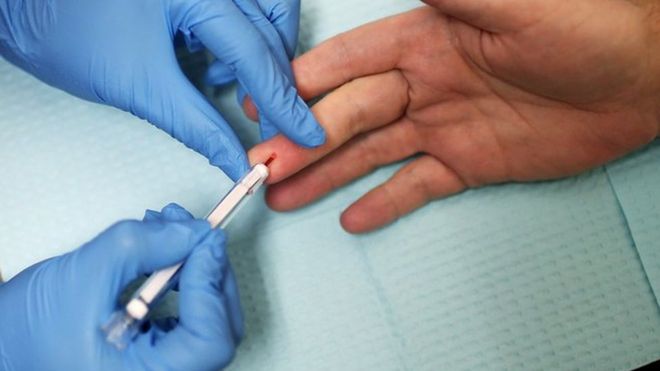
File picture of a blood sample being taken

China is building a vast DNA database with no appropriate privacy protection.
While a genetic database of convicted or suspected criminals exists in many countries, China is thought to include anyone, regardless of valid grounds for suspicion.
Ordinary citizens are being asked to have their blood drawn for a DNA sample, Human Rights Watch says.
Vulnerable groups and minorities appear to be a particular target of the push.
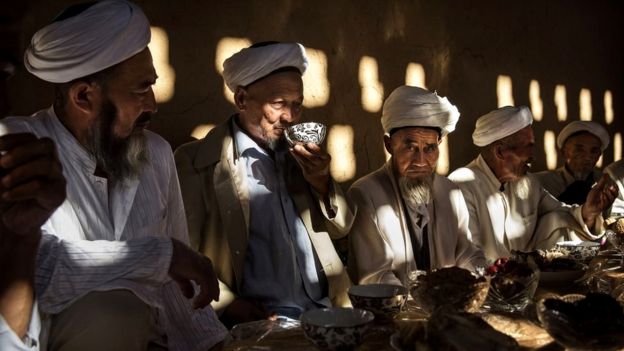
Those include migrant workers, political dissidents and ethnic or religious minorities like the Muslim Uighurs in China's far western Xinjiang region.
Xinjiang authorities are reported to have bought around $10bn (£7.7bn) in equipment to step up the collection and indexing of DNA.

'Expansion needs to stop'
Human Rights Watch warned that the collection programme is used to increase political control.
"Mass DNA collection by the powerful Chinese police absent effective privacy protections or an independent judicial system is a perfect storm for abuses," Sophie Richardson, China director at Human Rights Watch said in a statement.Police are asking ordinary individuals to provide blood for DNA sampling

DNA collection can have legitimate policing uses in investigating specific criminal cases, she explains. 
"But only in a context in which people have meaningful privacy protections."
"Until that's the case in China, the mass collection of DNA and the expansion of databases needs to stop."
There are plenty of people here in China who would say: "What's wrong with the police collecting your DNA? If you have done nothing wrong you have nothing to fear."
Yet this is a country without an independent legal system. 
So, for others, it feels creepy that the state is collecting the DNA of tens of millions of its citizens simply because it can and that many being required to give a blood sample are selected because they belong to a certain target group.
According to Human Rights Watch, police notices describe target populations beyond "suspects and criminals" and include categories such as "focus personnel" (dissidents, activists, those with prior criminal records) or "migrants" (Chinese citizens who travel to a city without official permission to live there).
Ultimately, the question for Chinese people is do you trust the Communist Party with your DNA?
There are those who would add that this enormous data collection from people not connected in any way to a crime is potentially illegal under Chinese law but, as I say, this is a country where the Party controls the courts.
Beijing recently introduced new restrictions in Xinjiang in what it describes as a campaign against Islamist extremism.
The Uighurs face widespread discrimination in Xinjiang

The measures include prohibiting "abnormally" long beards, the wearing of veils in public places and refusing to watch state television.
Recent years have seen bloody clashes in the region and the Chinese government blames the violence on Islamist militants and separatists.
Since 1989 when China started collecting DNA, it has amassed the genetic information of more than 40 million people. 
In the US, the national DNA index of offenders has only 12.7 million offender profiles.
Percentage-wise the US is still ahead of China though, having about 4% of the population indexed while China only has 2.9%.