Affichage des articles dont le libellé est export controls. Afficher tous les articles

mercredi 3 octobre 2018

Orwell in China

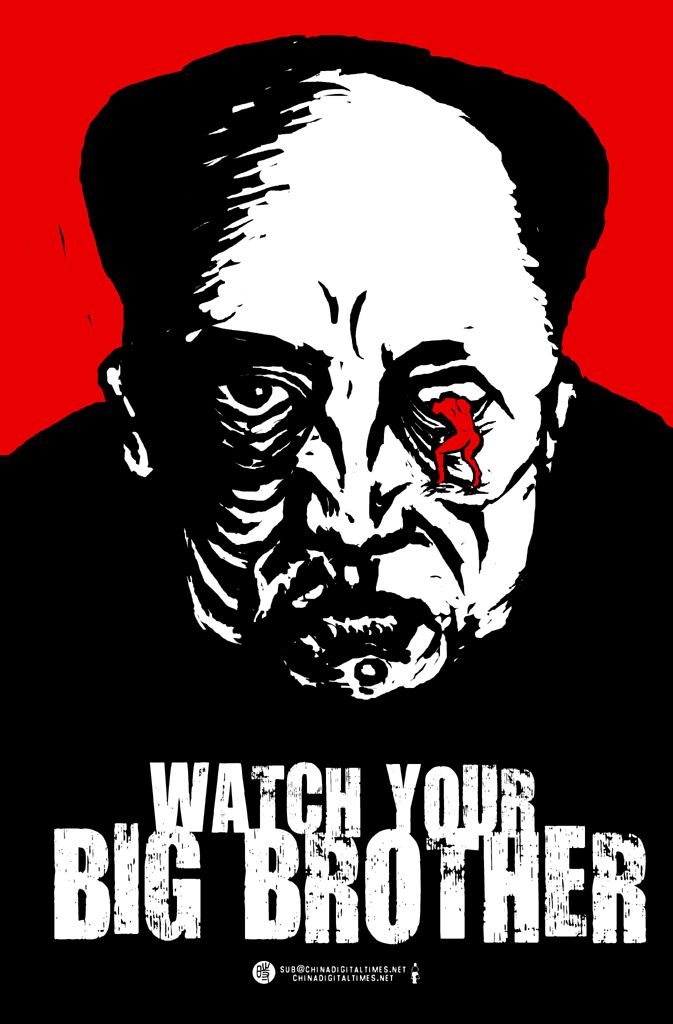
China’s Big Brother drafted into trade war
By Pete Sweeney

HONG KONG -- China’s Big Brother is getting dragged into the trade war by President Donald Trump. 
Export controls and sanctions are under consideration for companies whose technology helps Beijing monitor Muslim minorities. 
Despite the surprise of this U.S. administration weighing in on Chinese human rights issues at last, the policy could hit U.S. suppliers and further curb enthusiasm for related Chinese stocks.
Efforts by the People’s Republic to protect itself from internal threats have surged in recent years. 
Net domestic security spending reached nearly $200 billion in 2017, more than twice as much as a decade ago, according to an estimate by academic Adrian Zenz. 
It has concentrated on restive regions such as East Turkestan, where there have been violent incidents between the Muslim Uighur minority and immigrants from the ethnic Han majority. 
The United Nations has criticized policies including the detention of an estimated 1 million Uighur civilians. 
Massive purchase orders for monitoring equipment and software used for such purposes represent a big business opportunity for manufacturers and developers, domestic and foreign. 
State-owned Hangzhou Hikvision Digital Technology, for example, has developed camera technology specifically for identifying ethnic minorities, according to trade publication IPVM.
Its shares were the most actively traded in September over the Hong Kong-Shenzhen cross-border stock trading mechanism. 
Venture capitalists are eagerly shopping for security startups. 
Alphabet-owned Google is considering rolling out a censored Chinese version of its search engine, which would almost certainly be forced to block overseas content about activity in East Turkestan.
Under the restrictions being contemplated by the U.S. Commerce Department, the likes of Intel may be forced to stop selling to $39 billion Hikvision. 
Nvidia, another American chipmaker and Hikvision partner, generated $1.5 billion of revenue in China in the first half of the year. 
Thermo Fisher Scientific supplied East Turkestan police with DNA sequencing equipment, according to Human Rights Watch. 
After monster rallies last year, shares of Hikvision and peers including Dahua Security have been sliding since March. 
These latest developments could keep the pressure on them.

jeudi 9 mars 2017

China's ZTE pleads guilty, settles U.S. sanctions case for nearly $900 million

"ZTE Corporation not only violated export controls that keep sensitive American technology out of the hands of hostile regimes like Iran's, they lied about their illegal acts." -- U.S. Attorney General Jeff Sessions
By Karen Freifeld and Sijia Jiang | NEW YORK/HONG KONG

Chinese telecom equipment maker ZTE Corp has agreed to plead guilty and pay nearly $900 million in a U.S. sanctions case, drawing a line under a damaging scandal that had threatened its cut off its supply chain.
While the fine was larger than expected, ZTE, also a major smartphone maker, reported robust underlying earnings for 2016 and was upbeat in estimates for the first quarter.
That and the resolution of the case helped its Hong Kong-listed shares surge 6 percent.
A five-year investigation found ZTE conspired to evade U.S. embargoes by buying U.S. components, incorporating them into ZTE equipment and illegally shipping them to Iran.
In addition, it was charged in connection with 283 shipments of telecommunications equipment to North Korea.
"ZTE Corporation not only violated export controls that keep sensitive American technology out of the hands of hostile regimes like Iran's, they lied ... about their illegal acts," U.S. Attorney General Jeff Sessions said in a statement.
ZTE relies on U.S. suppliers for 25 percent to 30 percent of its components, many of which are key to its goods.
It purchases about $2.6 billion worth of components a year from U.S. firms, according to a company spokesman.
Qualcomm, Microsoft and Intel are among its suppliers.
"ZTE acknowledges the mistakes it made, takes responsibility for them, and remains committed to positive change in the company," ZTE Chief Executive Zhao Xianming said in a statement.
The company agreed to a seven-year suspended denial of export privileges, which could be activated if there are further violations, as well as three years of probation, a compliance and ethics program, and a corporate monitor.
It also agreed to an additional penalty of $300 million that will be suspended during the seven-year term on the condition the company complies with requirements in the agreement.
When asked about the ZTE case, Chinese Foreign Minister Wang Yi said relevant departments of the government would continue to pay attention as to whether Chinese firms were receiving fair treatment.
Tim O'Toole, a Washington D.C.-based lawyer with Miller & Chevalier specializing in sanction cases, said U.S. court documents suggest ZTE's attempts to obstruct the investigation were the main reason for a penalty significantly higher than in similar cases.
"What seems really important to U.S. regulators is whether a company or individual after the investigation starts is seen to continue to evade the sanctions and also obstruct the investigation," he said.
The investigation, spearheaded by the U.S. Department of Commerce, followed reports by Reuters in 2012 that ZTE had signed contracts to ship millions of dollars worth of hardware and software from some of the best-known U.S. technology companies to Iran's largest telecoms carrier.
Last year, the Commerce Department released internal documents showing senior ZTE executives instructing the company to carry out a project for dodging export controls in Iran, North Korea, Syria, Sudan and Cuba.
ZTE has replaced executives allegedly involved, including naming a new president.
The company said on Wednesday it slid to a preliminary net loss of 2.36 billion yuan ($342 million) in 2016, its first loss in four years, due to the settlement.
But without the fine, it would have logged 3.8 billion yuan in profit, 18 percent higher than a year earlier.
That was better than expected, as was a preliminary estimate for the first-quarter net profit rising between 21 and 31 percent, said Cindy Lam, an analyst with UOB Kay Hian in Hong Kong.
The settlement includes a $661 million penalty to Commerce; $430 million in combined criminal fines and forfeiture; and $101 million paid to the Treasury's Office of Foreign Assets Control (OFAC). 
The action marks OFAC's largest-ever settlement with a non-financial entity.
The Commerce Department will recommend ZTE be removed from a list of entities that U.S. firms cannot supply without a license if it lives up to its deal and a court approves its agreement with the Justice Department.
First placed on the list in March 2016, it has continued to do business with U.S. suppliers under a temporary general license that has been extended several times, with the latest reprieve expiring March 29.
The company's guilty pleas, which must be approved by a judge, will take place in U.S. District Court in Texas.