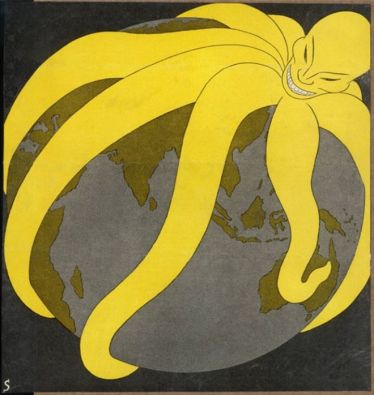
China's ongoing destruction of churches and removal of crosses from church buildings.
BEIJING — Beijing’s tightening grasp on religion has “created an enormous black market” for the fast-growing ranks of Chinese believers.
Under Xi Jinping, followers of many faiths have been pushed “to operate outside the law and to view the regime as unreasonable, unjust, or illegitimate,” says The Battle for China’s Spirit, a lengthy report released this week by Freedom House, a Washington-based NGO that advocates for civil liberties.
The report documents Christians barred from gathering for Christmas, Muslims jailed for praying outdoors and Tibetan Buddhists forced into “patriotic re-education.”
“Chinese officials have banned holiday celebrations, desecrated places of worship, and employed lethal violence,” the report finds.
“Security forces across the country detain, torture, or kill believers from various faiths on a daily basis.”
In the last two weeks alone, authorities have required the installation of GPS monitoring devices on private cars in one prefecture of China’s heavily-Muslim western Xinjiang region, and then marshalled a huge display of military force in the capital, Urumqi, where more than 10,000 armed troops gathered for what local media called an anti-terror rally.
A recent report by United Nations human rights investigators, meanwhile, called attention to “severe restrictions of religious freedom” in Tibet, noting mass evictions from two monasteries, the demolition of monastic homes and mining at a holy mountain.
The Freedom House report documents many other measures in China.
“Extensive surveillance, ‘re-education’ campaigns, and restrictions on private worship affect the spiritual lives of millions of people,” the report finds.
“And increasingly, economic reprisals and exploitation have become a source of tension and a catalyst for protests,” the report finds.
Religion has, from the time of Mao Zedong, existed uncomfortably in a state run by the formally atheist Communist Party.
But for much of the past two decades, authorities have taken a more lenient approach to religious observance, allowing underground places of worship into the open.
Religion has flourished, with hundreds of millions of people flocking to beliefs of all stripes.
Some of this has been encouraged under Xi, too, whose administration favours Buddhism and Taoism, religions the Communist Party sees as domestic belief systems that can help to instill a common sense of moral value and purpose.
At the same time, however, China has embarked on a broad effort to squeeze out foreign influence and civil society in order to reassert the authority of the state.
In a landmark speech on religion last spring, Xi urged monks, imams and pastors to “interpret religious doctrines in a way that is conducive to modern China’s progress,” and called on cadres to “guide and educate the religious circle and their followers with the socialist core values.”
Communist Party leadership sees “religion as a kind of existential threat to the party state. It creates a counterideology that can mobilize people quite quickly and quite passionately to oppose the party state,” said James Leibold, an expert on Chinese ethnic policy at La Trobe University in Melbourne, Australia.
Draconian repression of some beliefs, like Falun Gong, is long-standing.
But under Xi, religious suppression has grown broader and deeper, Prof. Leibold said.
“As a result, we’re seeing increasing controls across the board, from Catholicism to Tibetan Buddhism to Islam.”
China’s religious policies are not uniform, and deeply entangled with its treatment of ethnic groups.
In Tibetan areas, for example, Buddhist monks face heavy restrictions on travel and religious instruction.
Elsewhere in China, officials are erecting new Buddhist and Taoist temples.
The treatment of Islam, too, is not uniform across the country.
Muslims in Xinjiang live under restrictive rules on dress, facial hair and observance of important religious occasions, such as Ramadan.
Hui Muslims observe their faith with more freedom, although Hui, too, are facing more severe treatment, Prof. Leibold said.
The treatment of Tibetans and Uighurs offers a glimpse of the downward spirals that can emerge under harsh policies.
In Xinjiang, what’s needed is de-escalation, “some kind of a peace process like the British had in Northern Ireland,” said Ian Johnson, a Pulitzer-winning journalist and author of The Souls of China: The Return of Religion After Mao.
But that’s difficult to do when strict government policies have largely eliminated moderate voices and civil society.
“It’s a tough hole for them to climb out of there,” he said.
“And this is going to be the largest conflict area for religion and state in China going forward.”
Elsewhere, China has so far been more lenient.
Though hundreds of crosses were removed from churches in Zhejiang province, such action has barely been seen elsewhere – and virtually all Zhejiang churches remain open.
There are signs, however, that China is preparing for stronger action.
Draft rules released last fall threaten fines for those who rent space to unregistered religious organizations, and new restrictions on contact and financial transactions between Chinese believers and foreign groups.
Mr. Johnson warned that such a strategy could “create a lot more problems for them than they think. They’re essentially picking a fight with people who are not likely to back down.”
Under Mao, he noted, the Christian church roughly quadrupled in size despite the imprisonment and death of pastors and priests.
The Chinese church enjoys far more freedom today than it did then.
Still, some religious leaders, worried about the changes they are seeing, have begun to discuss how they might adapt.
Authorities have refused to allow the commercial publication of Christian books and told philosophy professors to expunge discussion of Christianity, which poses problems to the teaching of Western thinking influenced by the church.
“We do see efforts to limit the influence of religion among youth, and in educational situations,” said Brent Fulton, president of ChinaSource, a resource site for Christianity in China, and author of several books on the Chinese church.
“There have been Christians who have been questioned extensively about their relationships with foreigners.”
In response, some pastors have talked about rethinking their religious organizations, which might include splitting large congregations into smaller family churches.
Others see no reason to change, Mr. Fulton said.
“They would say, ‘We’re used to having our phones tapped. We’re used to having our meetings monitored. We’re used to being called in to drink tea with the police. So that’s normal. We just deal with that and we continue to do what we do.’”